Need more time in Thailand? First identify the permission you actually have, not just the word “visa.” A tourist on a visa exemption, a traveller with a tourist visa, an employee with a work-based extension, and someone staying with Thai family do not use one interchangeable extension checklist.
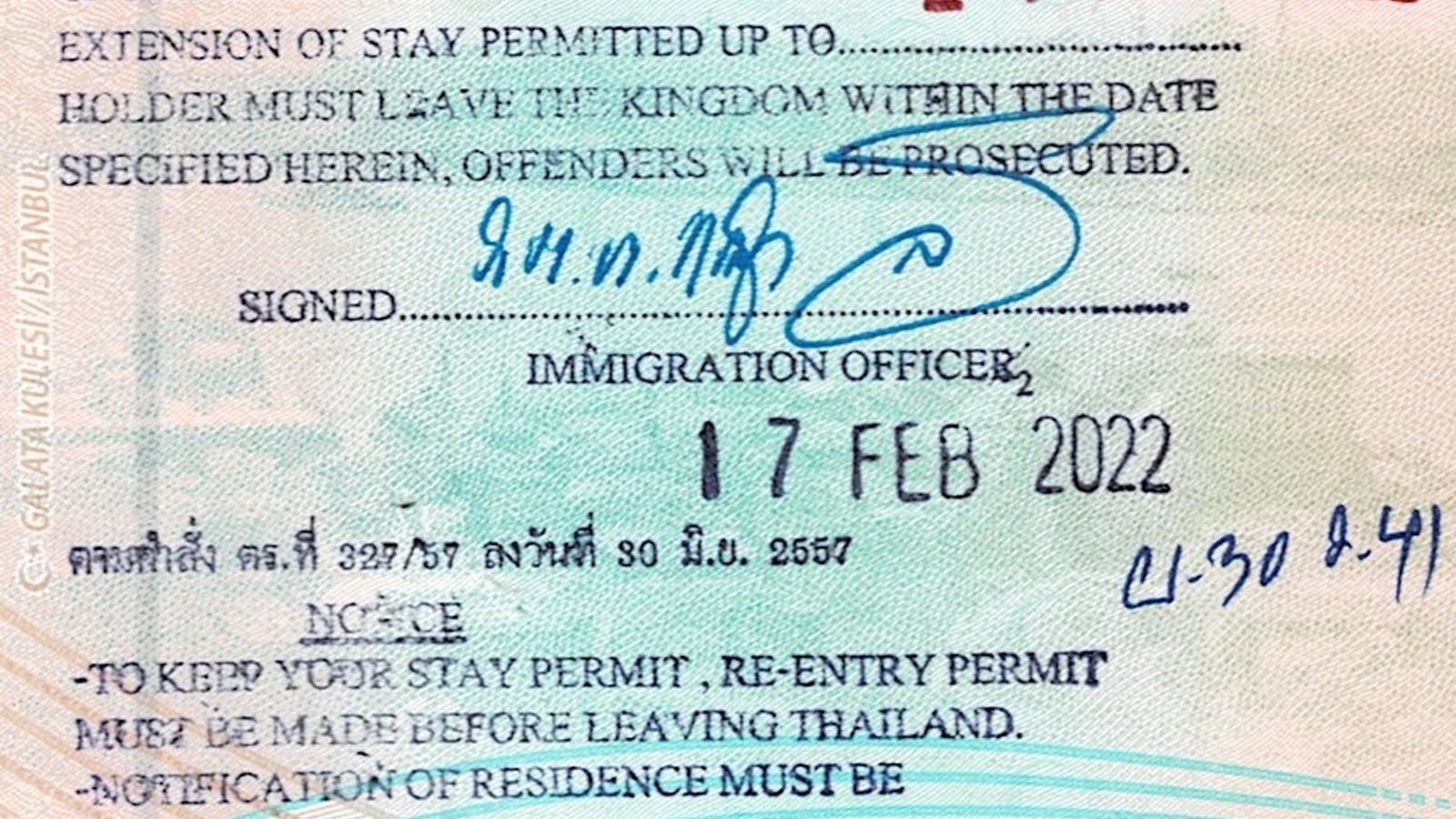
Your first two checks: Find the permitted-until date stamped by Immigration and the reason for your current permission. Then select the matching route below before that stay expires. Filing a form, booking an appointment or paying a fee is not automatically an approval to stay longer.
Which route matches your situation?
| You currently hold | What an extension might involve | Main point to check |
|---|---|---|
| Visa exemption for tourism | Eligible visitors under the revised 15 September 2026 scheme generally receive up to 30 days on entry and may request up to another 30 days, at Immigration's discretion. | Nationality and passport type, actual admission stamp, and whether your entry is under the new 30-day route, a 15-day or bilateral arrangement. Do not use an old “everybody gets 60 days visa-free” article. |
| Tourist visa (TR) | A TR commonly permits up to 60 days on entry, with a possible request for up to 30 additional days. | The stamp, previous extensions and the officer's decision—not the visa sticker validity alone. |
| Visa on Arrival (VoA) | Do not assume the usual tourist 30-day extension applies. Official Thai embassy guidance says VoA extensions are normally unavailable except specified circumstances such as illness preventing travel. | Confirm your actual visa/entry category with Immigration; an ordinary visa exemption is not VoA. |
| Work-based Non-Immigrant stay | A different and document-heavy business/employment necessity extension under the applicable Immigration rules. | Employer support, work permission, actual employment, tax/company records and the current extension basis. |
| Thai-spouse, other family, retirement or education route | Each has its own eligibility and financial/institutional evidence. | Relationship, income/bank history, school/retirement criteria and whether you already have the necessary Non-Immigrant status. |
Important 2026 change: Thailand's general 60-day visa-exemption scheme for 93 countries was revoked and revised measures took effect 15 September 2026. The Royal Thai Embassy in Moscow's dated announcement describes the effective change. The Royal Thai Embassy in London search-indexed 2026 guidance distinguishes up-to-30-day tourism admission from VoA. Earlier entry stamps may still reflect the rules in effect when that person was admitted; the government says people admitted before the effective date can remain until their actual permitted-until date. Do not shorten an existing stamp by guesswork, or promise a future extension solely because someone else received one.
How to apply for an ordinary extension: the practical sequence
- Read your passport record. Note nationality, visa/entry category, last entry date, latest Immigration extension (if any), and the printed permitted-until date. Your e-Visa's validity period and an entry stamp are different.
- Choose the correct purpose and office. Use the Immigration office responsible for your Thai address, and ask for the exact current document list for your category. For some routes, an employer, Thai spouse or institution must supply documents that a tourist does not need.
- Prepare TM.7 and the basic applicant pack. Immigration's published guidance describes TM.7, passport and signed copies of relevant pages, a 4 × 6 cm recent photograph, and the 1,900-baht extension application fee. Some forms/official lists still mention TM.6; ask whether that applies to your arrival and current border-record system rather than inventing a universal card requirement.
- Bring category-specific evidence. For tourism, prepare your accommodation/itinerary and any office-requested proof; for work, this can involve employer and company records; for family, relationship and financial evidence. Incomplete supporting papers can delay or prevent approval.
- File while your current permitted stay is still valid. The standard TM.7 guidance describes a personal application at Immigration. Check the office's booking or filing practices and inspect the official receipt and passport endorsement afterwards.
- Read the actual decision. Record the newly permitted-until date only if granted. If the officer makes your case under consideration, follow the specific dated endorsement and return appointment; neither a routine appointment nor every submitted application is a general right to remain beyond the old stamp.
Worked example: A traveller admitted for tourism on 10 October 2026 checks their stamp and finds a specific permitted-until date in November. They decide to remain longer. First they verify the entry was truly visa exemption, not VoA. Then they prepare TM.7, the photo, passport record and any local-office documents, and request the applicable extension before the stamp expiry. Even if another visitor obtained 30 extra days, they should not book onward travel assuming approval until their own passport is endorsed.
The three cases people often confuse
“My tourist visa is valid for three months; can I stay three months?”
Not from that label alone. Visa validity is the period in which the visa can be used for entry; permission to stay is granted at admission and may be extended later. The Royal Thai Embassy's tourist-visa guidance describes the TR visa's entry validity separately from up-to-60-day stay and potential additional days. Look at the entry/extension stamp, not just the e-Visa issue or expiry date.
“Can I change from tourism to a job or family stay just by extending TM.7?”
Not automatically. A new visa/immigration classification and an extension of an already eligible stay are not always the same transaction. Immigration must decide whether an in-country status-change route is available for your exact current admission and evidence. Do not start Thai employment simply because you applied for a different stay category; see work-permit preparation.
For work-based stays, a valid-looking annual stamp does not necessarily survive termination of the sponsoring employment. Handle the separate immigration and Department of Employment steps described in leaving a job or changing employers.
“Can a TM.47 report, TM.30 notice or re-entry permit extend my stay?”
No. A 90-day address report (TM.47) and accommodation notification (TM.30) are reporting duties. A re-entry permit is used, when required, to preserve an otherwise valid existing stay during travel. None substitutes for an approved new extension.
If your deadline is close or the application is refused
Bring your passport and actual stay stamp to Immigration promptly and ask: “Which extension category applies to this entry, can I submit it before [my printed date], and what exact date will be legally endorsed if I am refused or placed under consideration?” An application fee is not a promise of approval, and filing shortly before expiry leaves little time to correct missing papers.
If you cannot obtain lawful new permission, arrange departure by the date the competent authority determines. Do not use an imagined 7-, 15- or 30-day automatic grace period or rely on a ticket booking as legal permission. Seek specialist help for any disputed overstay, employment termination or unusual status, but do not replace the concrete official filing decision with a generic internet answer.
Keep one file of evidence: your passport photo page, latest entry and extension stamps, any visa, TM.7 submission and decision, address records, and family or employer evidence relevant to your actual route. Take that file to the responsible Immigration office and ask which category, document pack, fee and filing deadline applies before your permitted stay expires.
Verify your actual Immigration filing route: Some 2026 exemption information was accessible only through indexed official notices, while detailed Immigration pages returned access errors and some embassy pages still described older rules. Before your stay-until date, ask the responsible office to confirm your specific extension category, documents and acceptance procedure. A submitted form, booking or anticipated grace period is not lawful-stay approval.